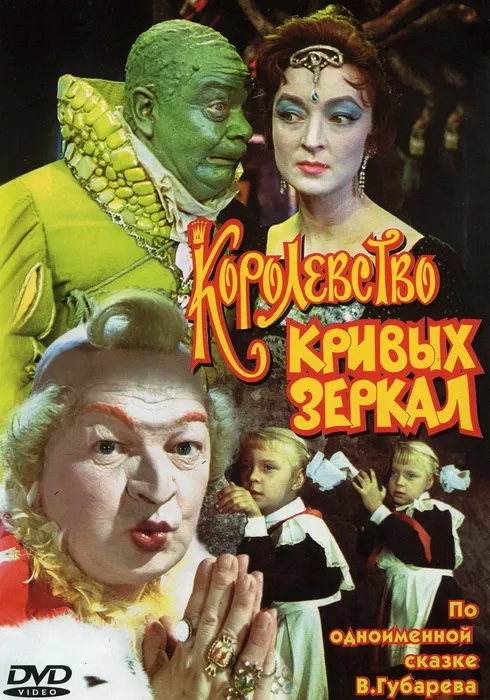
Kingdom of Crooked Mirrors
![[운영] 다를 수도 있지: 왓챠 영화주간 예매오픈_ 보드배너](https://an2-img.amz.wtchn.net/image/v2/ZNQjQU-ZHifVT7kaMyjaag.png?jwt=ZXlKaGJHY2lPaUpJVXpJMU5pSjkuZXlKd0lqb2lMM1l5TDNOMGIzSmxMM0J5YjIxdmRHbHZiaTh4TWpJMk5qUTRPRE0yTXpVMk15SjkuRi1ZcFVuOFFuSEZXVkRpNVc3VXlYQ1BQOVc4Y2c5b1hIZWFDaUFwR2RoQQ==)
![[운영] 다를 수도 있지: 왓챠 영화주간 예매오픈_ 보드배너](https://an2-img.amz.wtchn.net/image/v2/233_20dKzLebF1jmKbxILQ.png?jwt=ZXlKaGJHY2lPaUpJVXpJMU5pSjkuZXlKd0lqb2lMM1l5TDNOMGIzSmxMM0J5YjIxdmRHbHZiaTgzTmpjek1UZzRNREl3T0RZMU9UTWlmUS5FaGxkQnFEc1JRVGYtZDVVS2MzMnUtMXAycmd5VDBqNndSdmk1V1RaNE1F)
Kingdom of Crooked Mirrors is a 1964 Soviet fairy tale film directed by Aleksandr Rou based on a story with the same name by Vitali Gubarev. Both the surreal story by Vladimir Gubarev, together with the 1964 film, written in a Through The Looking Glass style. Alice-type Soviet girl, named Olya meets her counterpart Yalo, while looking into the mirror. Yalo is an absolute antipode to Olya, for example where Olya is precise and neat, Yalo is absent-minded, careless, etc. The explicit plot relates to Olya learning to see herself differently, but this occurs through an experience in the Kingdom of Crooked Mirrors which serves as a mechanism for commenting on the ability of a society to manufacture a false reality.
왓챠의 열 살 생일을 축하해 주세요 🎂
‘다를 수도 있지: 왓챠 영화 주간’ 예매 오픈!
왓챠
왓챠의 열 살 생일을 축하해 주세요 🎂
‘다를 수도 있지: 왓챠 영화 주간’ 예매 오픈!
왓챠