アルジェの戦い
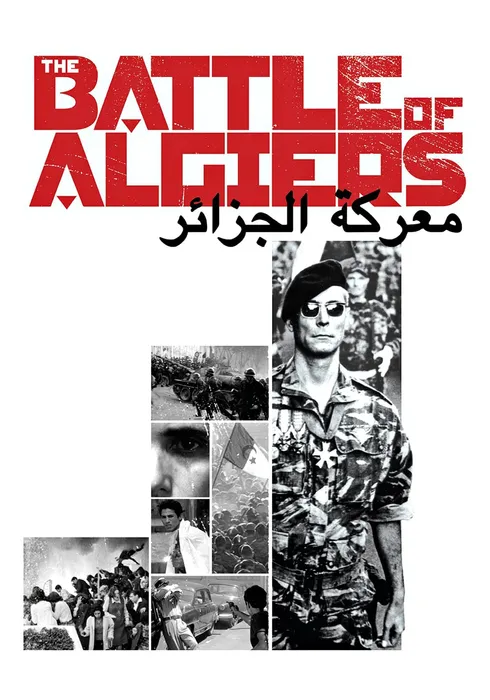
1954年11月1日、仏領アルジェリアのカスバを中心として、暴動が起きた。それはアルジェリアの独立を叫ぶアルジェリア人たちの地下抵抗運動者によるものだった。激しい暴動の波はアルジェリア全域から、さらにヨーロッパの街頭にまで及び、至る所で時限爆弾が破裂した。1957年10月7日、この事件を重大視したフランス本国政府は、マシュー将軍(ジャン・マルタン)の指揮するパラシュート部隊をアルジェに送った。独立運動地下組織の指導者はサアリ・カデル(ヤセフ・サーディ)という青年であった。彼はマシュー将軍の降伏勧告に応じようとせず、最後まで闘う決意であった。日増しに激しさを加えるテロ行為に対処するため、マシュー将軍は市内に数多くの検問所を設け、現地人の身体検査から、パスポートの検閲まで、厳しく取締まった。そしてテロ容疑の情報が入ると抜き打ち的に民家やアパートを襲って、アラブ人の強制逮捕を行なった。そのたびごとに地下指導者たちは監禁され、ある者は拷問され、またある者は殺された。しかしサアリは屈せず、女性連絡員ハリマ(ファウチア・エル・カデル)をはじめとするわずかの部下を率いて、地下活動を続けた。パラシュート部隊の執拗な追求の手を巧みにのがれてきた彼も、ある日、街頭でフランス官憲に目撃され、ついに本拠をつきとめられてしまった。彼はマシュー将軍の投降の呼びかけにも応じなかったため、ハリマと共に軍隊の手にかかって射殺された。サアリの死後三年経た1960年12月、平静だったアルジェは、独立を願うアルジェリア人たちの叫びで再び騒然となった。
キャスト/スタッフ
レビュー
ギャラリー
挿入曲情報

Passion selon Saint Matthieu, BWV 244: "Kommt, ihr Töchter"

Theme (From ''The Battle of Algiers'', 1966)
La Bataille d'Alger (feat. Donquishoot)
Luglio 1956: Gli attentati

The Sardines Have Finished Knitting
Algeri: 1 Novembre 1954 #2
Zahra
4.5
"Battle of Algiers" is not just a film; it is a profound odyssey that navigates the labyrinthine corridors of humanity's collective consciousness. Through its monochromatic tapestry, the film weaves a symphony of chiaroscuro emotions, casting shadows that dance with the resilience of the human spirit against the backdrop of Algerian independence. Director Gillo Pontecorvo's deft touch imbues the narrative with a chiaroscuro of truth and memory, where past and present coalesce in a mosaic of defiance and aspiration. The film's non-linear narrative, akin to the intricate pathways of memory, draws us into the core of the Algerian struggle. The docudrama approach blends reality and cinema, offering a harrowing yet illuminating account that treads the fine line between oppressor and oppressed. The non-professional actors, bearers of raw authenticity, become conduits for the voices that history often overlooks. Ennio Morricone's score is not merely musical accompaniment, but an ethereal incantation that evokes the primal rhythms of a nation's heartbeat – the oscillation between hope and despair. As an Algerian observer from a distance, my repeated pilgrimage to this celluloid altar underscores my desire to glean deeper truths, to bridge the temporal expanse and commune with the essence of my own heritage. In a world perpetually grappling with the echoes of struggle and liberation, "Battle of Algiers" stands as a mosaic of the human experience. Its tableau of sacrifice, resistance, and self-determination resonates across epochs, an eternal reminder that the yearning for autonomy is an elemental pulse within us all. As you engage with this cinematic opus from afar, you partake in a cosmic dialogue that transcends geography, an intangible connection to a narrative that reverberates through the annals of time.
さらに多くのコメントを見るには、ログインしてください!